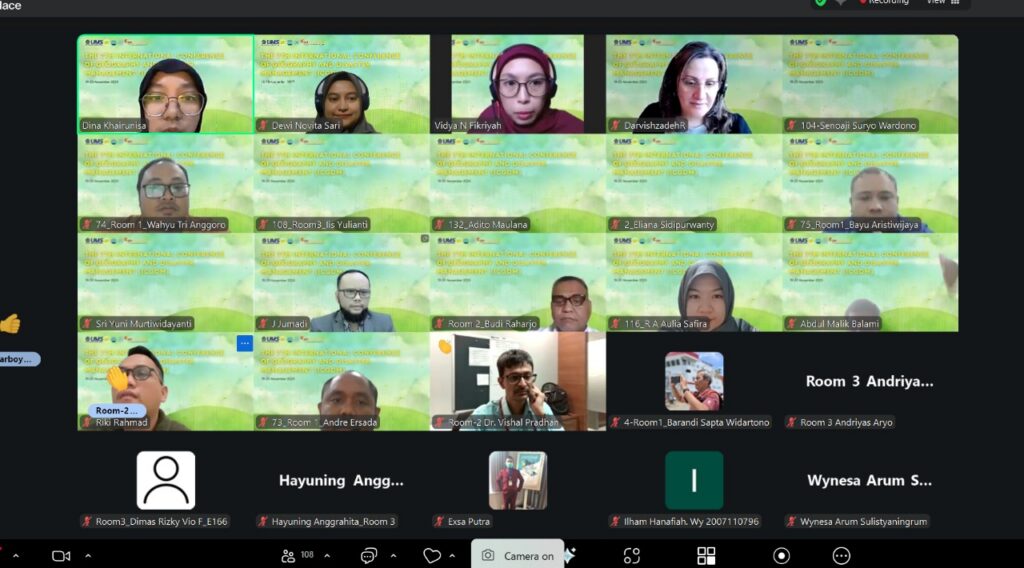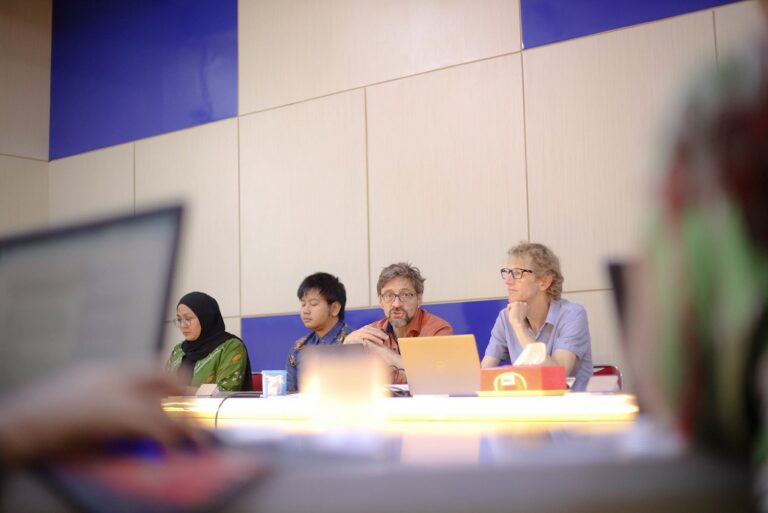
The Faculty of Geography at Universitas Muhammadiyah Surakarta (UMS) continues to advance transformative, practice-based learning. This commitment was reaffirmed through an official visit from Universitas Gadjah Mada (UGM) and the Faculty of Spatial Development and Infrastructure Systems of Technische Hochschule Köln (TH Köln), Germany, on 27 November 2025.
The meeting served as an important momentum for the Faculty of Geography UMS to expand academic cooperation in developing an applied curriculum that is more responsive to societal needs and global dynamics.
The visit was attended by members of the UMS academic community, Professor Johannes Hamhaber and Günther Straub from TH Köln, Dr. Dyah Rahmawati Hizbaron from the Faculty of Geography UGM, as well as representatives from the nonprofit organization Kota Kita.
Promoting Real Lab as the Foundation of the New Curriculum
The Vice Dean II of the Faculty of Geography UMS, Dr. Aditya Saputra, S.Si., M.Sc., explained that the main discussion focused on the collaborative development of an innovative curriculum under the Erasmus Plus framework, emphasizing real lab or living laboratory learning. “The real lab approach is at the core of this curriculum design. Learning is directed toward real-world societal issues, enabling students to produce relevant and impactful solutions,” Aditya explained.
He added that the next step involves preparing a formal proposal, which will receive full support from the Faculty of Geography UMS. The hope is that this collaboration will secure funding and contribute to future curriculum revisions at UMS.
A Transformative Learning Model from TH Köln
Representative of TH Köln, Günther Straub, highlighted that Erasmus Plus is designed to strengthen university capacity through a transdisciplinary transformative science approach. This curriculum opens opportunities for collaboration between universities, community organizations, and various external partners. “Universities need to build knowledge rooted in real societal challenges. Through Erasmus Plus, learning becomes more connected to the social context around it,” he said.
Günther also emphasized the importance of improving faculty capacity as part of efforts to deliver high-quality and impactful education.
UMS as a Strategic Partner in Southeast Asia–Europe Collaboration
TH Köln researcher and professor of spatial development, Professor Johannes Hamhaber, explained that their faculty offers several leading master’s programs—such as Renewable Energy Management, International Water Resources Management, and Natural Resources Management and Development—focused on applied technologies and spatial development strategies.
Their long-standing international collaborations across Southeast Asia, including partnerships with both UGM and UMS, are expected to strengthen academic networks and support the implementation of applied curricula in the region.
Meanwhile, Dr. Dyah Rahmawati Hizbaron from the Faculty of Geography UGM emphasized that UMS is a close and strategic partner for joint involvement in Erasmus Plus initiatives. “UGM is committed not only to collaborating with global partners but also to involving national universities in global academic engagement,” she stated.
A First Step Toward Transforming Geography Education at UMS
This visit marks an early step for UMS in adopting challenge-based, practice-oriented learning approaches. The applied curriculum jointly developed with international partners is expected to enhance student involvement in field-based research, strengthen faculty competence in implementing real lab learning, and broaden international academic collaborations for the Faculty of Geography UMS.
With strong commitment and collaborative support from various institutions, the Faculty of Geography UMS is optimistic about creating a curriculum that is more relevant, innovative, and impactful for society. (*)