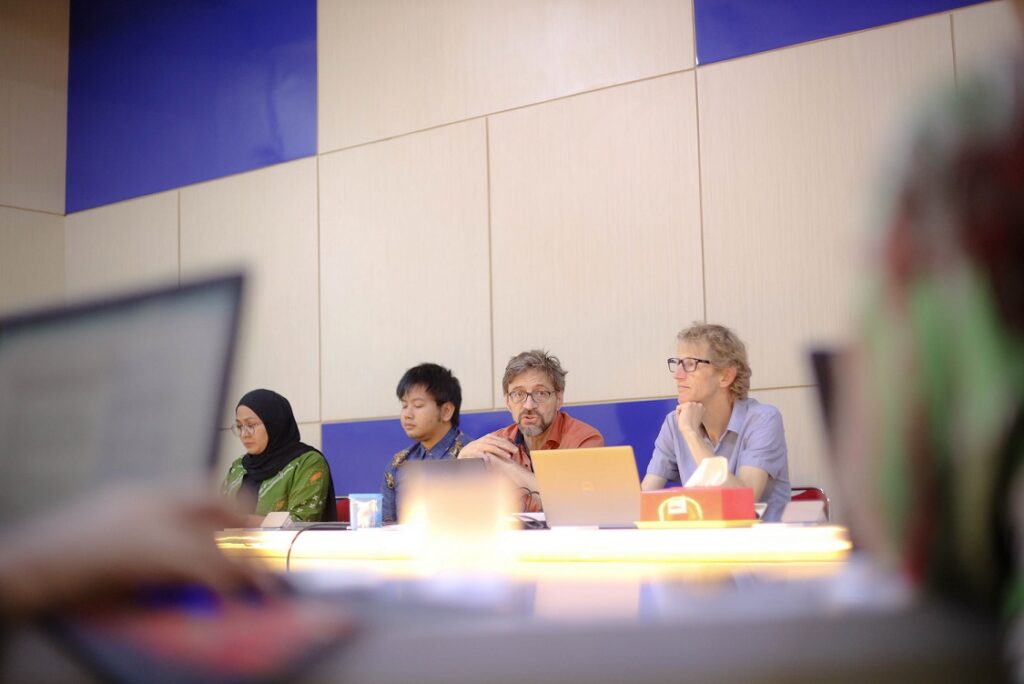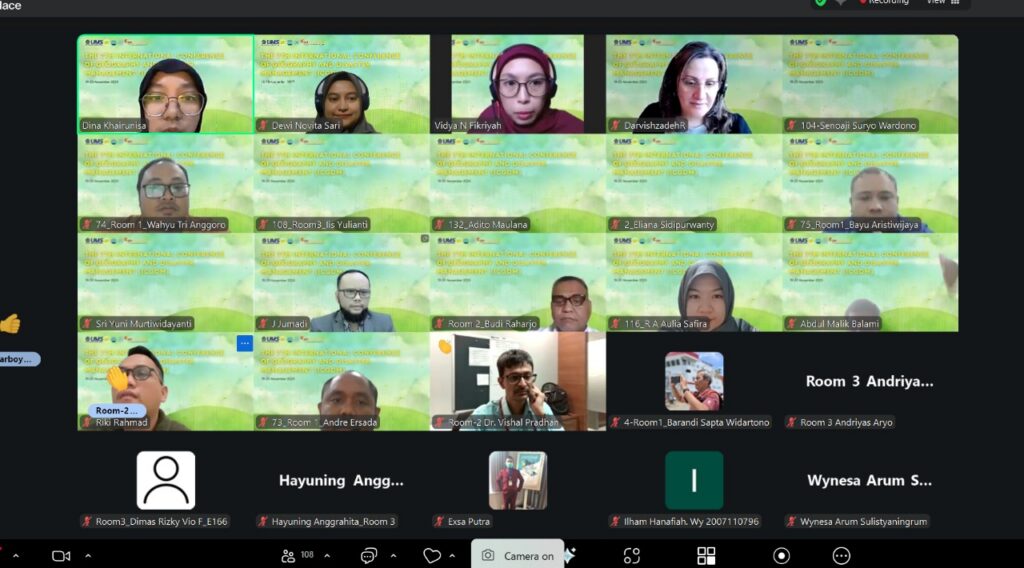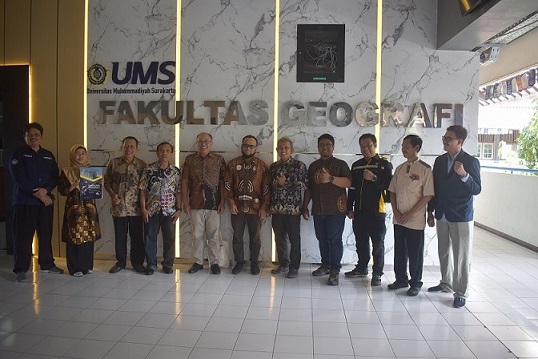
On Friday, December 8, 2023, the Faculty of Geography held a public lecture in Rooms LPPM 01 to LPPM 03. The lecture discussed the “Development of Advanced Microwave Remote Sensors and Their Applications for Disaster and Environmental Monitoring,” led by Professor Josapahat Tetuko.
In the lecture, Professor Josapahat Tetuko discussed the importance of advanced microwave remote sensor development and its application in disaster and environmental monitoring. He explained that various events occurring periodically on Earth could have significant impacts on transportation, infrastructure, as well as weather conditions both during the day and at night.
To conduct research and education on Synthetic Aperture Radar (SAR) systems and applications, accurate and sophisticated sensors are required. SAR, an acronym for Synthetic Aperture Radar, is a remote monitoring technology that uses microwave radiation to create 2D or 3D images of the Earth’s surface, even in adverse weather conditions or at night.
Professor Josapahat Tetuko also highlighted that SAR is currently experiencing rapid development and deployment. This technology is being developed and applied to various platforms such as Unmanned Aerial Vehicles (UAVs), aircraft, High Altitude Platform Systems (HAPS), and microsatellites, especially in the context of aerial vehicles and SAR systems on microsatellites.
This public lecture provided profound insights into how microwave remote sensor technology, particularly SAR, can be used to address challenges in disaster and environmental monitoring. Participants, including students and faculty members, gained a better understanding of the importance of developing this technology to safeguard the security and sustainability of our environment.